
Bollywood actress Raveena Tandon has opened up about the challenges celebrities faced during the 1990s, describing the era as a “toxic phase” dominated by yellow journalism and limited control over public narratives.
Speaking in a recent interview on Not Done Yet: The Malini Agarwal Show, the actress reflected on how media practices of that time often left public figures vulnerable to misinformation and sensational reporting.
Raveena Tandon explained that during the 90s, actors had no immediate platform to respond to false or misleading stories once they were published. Unlike today’s digital age, where social media allows instant clarification, celebrities at the time had to rely entirely on traditional media channels.
She noted that once a damaging headline was printed, it would spread widely before any correction could be issued, and even then, clarifications rarely had the same impact as the original story.
According to her, yellow journalism during that period operated with limited accountability, making it difficult for actors to challenge inaccurate reporting or control how they were portrayed in the media.
The actress further highlighted that access to editors and media gatekeepers played a major role in shaping public perception. Stories were often framed in ways that could significantly influence an actor’s reputation, regardless of their accuracy.
Raveena emphasized that while corrections or apologies sometimes followed, they were often ineffective in reversing the damage caused by the initial publication. This, she suggested, left a long-lasting impact on the careers and personal lives of many actors.
In contrast, she acknowledged that today’s entertainment industry benefits from social media platforms, where celebrities can directly communicate with audiences and clarify misunderstandings in real time.
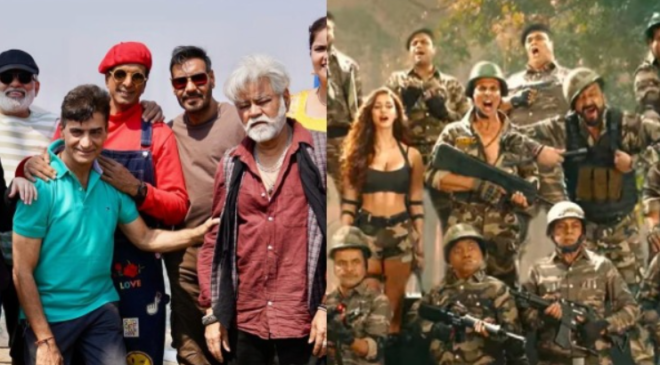
On the professional front, Welcome to the Jungle, featuring Raveena Tandon alongside Akshay Kumar, is scheduled for release on June 26, 2026.
The actress’s comments have sparked renewed discussion about the evolution of media ethics, from print-dominated reporting in the 90s to today’s fast-paced digital information environment.
Her reflections highlight how media accountability, access to platforms, and the speed of communication have transformed the way public figures manage their image and respond to controversies.